Weekdays 8:00am-5:00pm Sat Closed Sun Closed
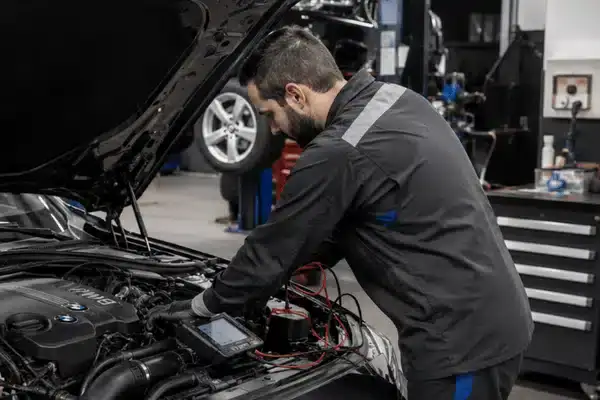
Leaks, cooling trouble, electrical faults, timing chain wear, and xDrive shudder are some of the most common BMW problems. Finding the cause early can prevent a breakdown and reduce the cost of BMW repair.

BMW owners often visit a repair shop for these five issues:
These common BMW problems do not affect every model. The engine type, build date, mileage, VIN, and service history all matter.
BMW has also released service bulletins for faults linked to certain models. A trained technician can check whether any apply to your vehicle.
Stop driving if the car is steaming, losing fluid, making a hard-knocking sound, or losing steering or braking support.
Leaks could form near the valve cover, oil filter housing, oil pan, or cooling system. Common signs include fluid spots, smoke, low fluid levels, or a burning smell.
BMW bulletin SI B11 13 15 covers a plastic oil filter housing used on certain early N20 vehicles. A fault in this part may cause an oil or coolant leak.
A technician may use a visual check, pressure test, or dye test to locate the exact source. This helps avoid replacing the wrong part.
When a water pump, thermostat, hose, valve, or sensor malfunctions, a BMW may overheat. Steam, low cabin heat, coolant loss, or a warning about a high temperature are all possible.
When the engine is hot, avoid opening the coolant tank. Serious burns can result from hot coolant.
Turn off the engine and arrange a tow if the car overheats. Driving it further may cause costly engine damage.
BMW gave added warranty coverage to certain vehicles with N20 and N26 engines. The coverage applied to the timing chain and oil pump drive chain wear. It was a warranty extension, not a recall.
One warning sign is a high-pitched whine from the lower engine area. The pitch may rise as engine speed increases.
Not every N20 or N26 engine has this problem. A BMW repair shop should check the engine code, VIN, and service history before making a diagnosis.
A weak battery may cause slow starting, a no-start problem, or several warning messages at once. Low voltage can also affect linked control units.
Many newer BMW models need battery registration after a replacement. BMW uses ISTA software to record the battery type and capacity.
Skipping this step may cause incorrect charging or warning messages. A trained shop can fit and register the battery correctly.
Worn bushings, shocks, struts, and tires may cause clunks, vibration, or poor handling. xDrive models may also shudder during slow turns or light acceleration.
BMW guidance tells technicians to inspect tire size, fit, and wear first. Uneven tires can affect the xDrive system.
The next step may include testing the transfer case and checking its fluid. The shop should confirm the cause before replacing driveline parts.
Weather can place added stress on parts that are already worn.
Climate affects when a fault appears, but the vehicle’s age and service history still matter most.
Weather can place added stress on BMW parts that are already worn or nearing the end of their service life.
Cold starts can reveal weak batteries, starter faults, or poor coolant protection. Shops may test battery output, charging voltage, and coolant strength.
High temperatures can shorten battery life and place more strain on the cooling system. Heat is a major cause of battery wear.
Hot weather and changing temperatures may expose leaks, cooling faults, or battery trouble. Repairs may include sealing a leak, replacing a pump, or registering a new battery.
Long, hot summers make battery, cooling system, and tire checks an important part of regular BMW maintenance.
Begin with the symptom instead of guessing which part has failed.
| Symptom | Possible Cause | Safe Next Step |
| Oil smell or smoke | Engine oil leak | Check the oil level and book a leak test |
| Low coolant warning | Leak, pump, valve, or sensor | Stop if the engine is hot |
| High-pitched engine whine | Chain wear on some engines | Avoid hard driving and check the VIN |
| No start with several warnings | Battery, starter, or charging fault | Test the battery and charging system |
| Shudder during slow turns | Tire or transfer case problem | Check all four tires first |
Do not clear fault codes before the car is scanned. Stored codes and live data can help the technician find the real cause.
A basic reader may show which system reported the fault. It does not always identify the failed part.
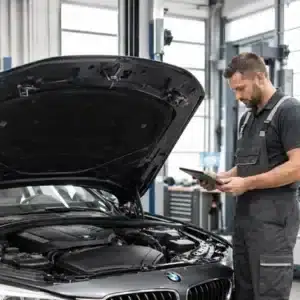
Book an inspection when a warning keeps returning, fluid levels drop, or the car feels different to drive.
Owners often report leaks, cooling faults, battery trouble, suspension wear, and warning lights. The exact risk depends on the model, engine, and build date. A full inspection can confirm the failed part.
Overheating, low oil, battery failure, and charging faults can leave a BMW unable to run. Severe engine or driveline faults may also cause a breakdown. Regular BMW maintenance helps lower the risk.
Check for smoke, fluid loss, shaking, or loud noise. Stop driving and arrange a tow if any of these signs appear. If the car runs normally, book a scan before clearing the code.
A basic reader shows which system stored the code. It may not prove which part caused the fault. BMW repair often requires live data and further system tests.
The battery can be replaced on some models at home. Many newer BMWs still need battery registration after installation. A trained shop can install the right battery and register it correctly.
No. BMW’s added coverage applied only to certain vehicles with N20 and N26 engines. The VIN, engine code, and service record should be checked first.
Catching common BMW problems early can protect the engine, driveline, and electrical system. Europe Services Auto provides BMW repair in Killeen using ASE-certified mechanics and advanced scan tools. Book your BMW service today or contact the team to get a quote.