Weekdays 8:00am-5:00pm Sat Closed Sun Closed
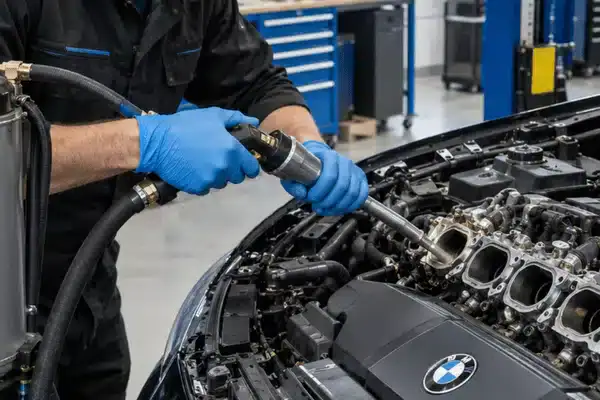
Walnut blasting removes hard carbon buildup from engine intake valves. BMW and Audi both document it in their own service bulletins as a fix for carbon-related rough running and misfires. In 2026, published cost estimates range from about $300 to $1,500 or more, depending on the engine and labor. BMW, Audi, and Volkswagen owners do not have one fixed mileage schedule for this service. A mechanic should first confirm that carbon deposits are causing a problem.
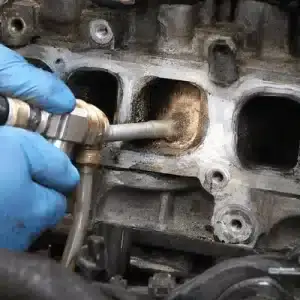
Walnut blasting cleans carbon deposits from the intake valves and nearby ports. A technician usually removes the intake manifold to reach them. With each valve closed, the technician sprays crushed walnut shells into the port. A vacuum removes the shells and loosened carbon before the engine is put back together.
BMW’s procedure for its N54 engine, for example, calls for removing the intake manifold, cleaning the valves with the BMW Group Carbon Blaster tool, and fitting new intake gaskets. It specifies fine 20/30-grade walnut shells, about 0.45 to 0.80 mm in size.
The process needs proper tools and care to keep debris out of the engine. BMW’s 2026 carbon-blasting instructions also state that walnut media must never be reused.
In a gasoline direct-injection engine, fuel enters the cylinder instead of washing over the intake valves. Oil mist and other residue can stick to those valves and harden with heat.
MAHLE’s January 2026 Technical Messenger points to soot from the exhaust gas recirculation (EGR) system and oil mist from the crankcase, combined with the high temperature of recirculated exhaust gas, as causes of carbon buildup in the intake. Consumer Reports adds that small amounts of engine oil seep past the valve seals during normal operation and bake onto the intake valves.
This affects some BMW, Audi, and VW engines, but the risk differs by engine design. Bosch notes that engines using both port and direct injection can wash their intake valves with fuel. That helps limit deposits.
Consumer Reports notes that many manufacturers responded by adding a second injector in the intake manifold that runs intermittently to keep the intake valves clean.
Most of the bill goes toward the time spent getting to the valves. Some engines have less room to work, so the mechanic must remove more parts. BMW’s 2026 carbon-blasting instructions for its S68T and XB1T engines, for example, begin with removing the engine and transmission and placing them on an engine table. ThePricer’s August 2026 cost guide gives these rough price ranges:
| Engine Type | Estimated Cost |
| Four-cylinder | $300 to $600+ |
| Six-cylinder or hard-to-reach engine | $600 to $1,000+ |
| V8 or complex performance engine | $700 to $1,500+ |
These prices give owners a starting point, but they aren’t confirmed quotes for shops in Killeen. The final bill may also include new gaskets or other repairs.
When calling a shop, have your engine code ready. Ask whether the price covers the inspection, labor, replacement gaskets, and any other work.
You won’t find one service interval that works for every BMW, Audi, or Volkswagen. Two cars with similar mileage can have very different amounts of carbon buildup.
Here’s what each manufacturer says:
No universal mileage interval. Cleaning depends on engine condition and diagnosis.
Service guidance: BMW bulletins cover specific engines and carbon-related problems.
When to clean: When inspection confirms deposits are causing symptoms.
Watch for: Rough cold starts and misfires, especially with frequent short trips.
When to clean: After confirming carbon deposits are responsible.
Watch for: Rough cold starts, longer cranking and hesitation.
When to clean: Only when diagnosis supports intake-valve cleaning.
If your car runs well, there’s no reason to book walnut blasting based on mileage alone.
Carbon deposits can make it harder for your engine to run as it should. You might notice:
These symptoms are worth checking rather than ignoring. MAHLE warns that if deposits keep an intake valve from seating properly, the valve can’t shed heat as it should, which may damage it or even cause it to melt. Carbon on the swirl or tumble flaps inside some intake manifolds can also disrupt airflow or jam the flaps, leading to uneven running or poor throttle response.
Don’t assume carbon is the problem just because your car shows one of these signs. Bad spark plugs, worn coils, and injector faults can cause similar trouble.
A mechanic can scan for fault codes and check the usual causes first. If the check engine light starts flashing, stop driving as soon as it’s safe and arrange an inspection.
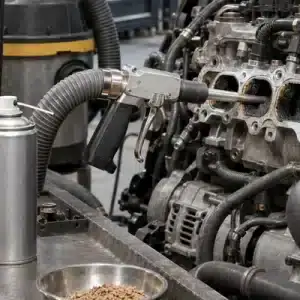
Chemical intake sprays may help with lighter deposits because they reach the intake valves. Fuel-tank additives cannot directly wash those valves in direct-injection-only engines.
Walnut blasting physically removes stubborn deposits. MAHLE’s 2026 Technical Messenger describes walnut-shell blasting as an effective, gentle way to clean valve deposits. MAHLE also notes that some badly affected intake manifolds may need replacing rather than cleaning.
A mechanic can inspect the buildup and work out which option makes sense for your engine.
Searching for walnut blasting near me will bring up shops with different prices. The cost depends on your engine, local labor rates, and how much needs to come apart. Ask for a quote that includes parts and labor, and make sure the shop checks the problem first.
No, and you shouldn’t book the service just because your car reaches a certain mileage. Some BMW engines collect carbon faster than others. A mechanic can check whether deposits are causing trouble before you spend money on cleaning.
Audi walnut blasting works much like the process used on BMW engines. Both use crushed walnut shells to clear carbon from the intake valves. The tools and steps differ by engine, and Audi’s 2025 bulletin covers cleaning after removing the intake manifold or compressor.
Yes, but only when carbon buildup is causing the misfires. If the trouble comes from a bad coil, spark plug, or injector, cleaning the valves won’t fix it. Have the engine checked first so you know what actually needs repairing.
Fuel-tank additives won’t clean the backs of intake valves in a direct-injection-only engine. That’s because the fuel goes straight into the cylinders instead of passing over the valves. Some intake sprays can reach those areas, but thick carbon deposits may need walnut blasting of the intake valves to remove them.
It’s possible, but there’s plenty that can go wrong without the right tools. The valves must be closed during cleaning, and the walnut shells and debris need to be removed. If anything gets left inside, it could damage the engine. For most car owners, having a trained mechanic do the work is the safer choice.
If your BMW, Audi, or Volkswagen has started idling roughly or losing power, don’t guess at the cause. At Europe Services Auto in Killeen, TX, our team works on European vehicles and can help find out what’s wrong. Learn more about our BMW servicing, or book an appointment and request an estimate.