Weekdays 8:00am-5:00pm Sat Closed Sun Closed

A BMW feels amazing when it’s running right. The ride is smooth. The steering is sharp. And everything just feels premium. But even great cars can have patterns, and many owners deal with the same common BMW problems over time.
We’ll break down the common BMW problems drivers report most often, what symptoms to look for, and when to act early. If you’re shopping for a used BMW or already own one, this list of common BMW problems can help you avoid bigger repair surprises later.
| Issue | What You’ll Notice | Risk Level | Best Next Step |
|---|---|---|---|
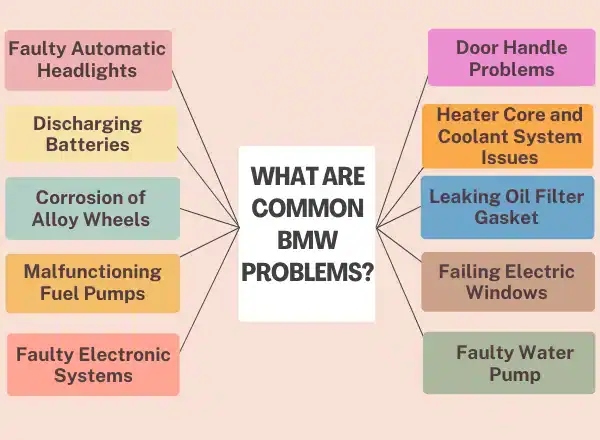
| Automatic headlights | Lights stay on, odd battery drain | Medium | Check light sensor + electrical draw |
| Battery discharge | Dead battery overnight | Medium | Test parasitic drain + key proximity |
| Alloy wheel corrosion | Rust spots, bubbling clear coat | Low–Medium | Avoid harsh washes, inspect rims |
| Fuel pump failure | Hard start, sputter, poor power | High | Diagnose fuel pressure + wiring |
| Electrical faults | Random warnings, power issues | High | Full system scan by BMW tech |
| Door handle issues | Pull handle, door won’t open | Medium | Inspect latch + lock mechanism |
| Coolant/heater core | Overheating, weak heat, sweet smell | High | Pressure test + leak check |
| Oil filter gasket leak | Burning smell, oil on engine area | High | Replace gasket before bigger leaks |
| Power window failure | Window stuck, slow movement | Medium | Motor/regulator inspection |
| Water pump failure | Overheating, warning light | High | Replace pump + thermostat together |
If these symptoms match what you’re seeing, don’t wait. A quick inspection can prevent bigger BMW problems later.
Automatic headlights are a great feature. But some owners notice the lights stay on when they shouldn’t. This can slowly drain the battery and trigger other BMW issues over time.

Usually moderate risk. The big concern is hidden battery drain and electrical stress.
If your BMW lights act “stuck on,” have a BMW specialist inspect it early.
Many BMW batteries last around 4–6 years. But one of the common BMW problems owners mention is a battery that dies overnight. This can happen if a door isn’t fully closed, lights stay on, or the smart key sits too close to the car and keeps systems awake.
This is one of those BMW quality issues that feels random, but it often has a real cause.
Medium risk. It may be a simple battery issue, or it may point to a deeper electrical draw.
If the battery keeps dying, book a diagnostic test with a BMW specialist.
BMW wheels look great, but some owners see early corrosion or rust-like damage. There isn’t always a “perfect fix,” but replacement and prevention options can help. Harsh automated car washes can make it worse because high pressure can push water into small imperfections.
This is one of the most common faults with BMWs that shows up mostly as a cosmetic headache, but it can still get worse over time.
Cost-risk context: Low to medium risk. Usually cosmetic, but rim damage can lead to air leaks.
If you see bubbling or corrosion, have your wheels inspected before it spreads.
A failing fuel pump is one of the most frustrating BMW problems because it can leave you stranded. Symptoms often include slow acceleration, sputtering at higher speeds, or a no-start situation.
This is a top example of common BMW problems that should never be delayed.
Cost-risk context: High risk. Fuel delivery issues can cause breakdowns and poor engine performance.
If you feel power loss or sputtering, have a BMW specialist inspect it early.
Not every BMW owner runs into electrical problems. But electrical faults do happen, and they can show up as warning lights, power glitches, or odd behavior across multiple systems.
This is where many people start talking about BMW quality issues, because the problems can feel unpredictable.
Cost-risk context: High risk. Electrical faults can affect safety systems and drivability.
If warning lights keep returning, get a full diagnostic scan from a BMW specialist.
Some owners report door handle issues where the handle pulls normally, but the door won’t unlock or open. This has been mentioned often with SUV models like the BMW X5. In many cases, the fix involves replacing the door locking mechanism.
This is one of the BMW issues that starts small but can quickly become a daily problem.
If your door starts sticking or failing to open, don’t ignore it. Get it checked early.
Coolant system issues can show up as overheating or weak cabin heat. Another red flag is a sweet smell from the heater area, which can signal a coolant leak.
These common BMW problems can get serious if the engine overheats.
If you notice overheating or a sweet smell, have a BMW specialist inspect it early.
A leaking oil filter gasket is a common issue as parts age and seals become brittle. If caught early, it’s usually straightforward. But if left alone, it can lead to bigger leaks and higher repair costs.
This is one of the most common faults with BMWs that’s much cheaper when handled early.
If you smell burning oil or see signs of leaking, get it inspected early.
Power window problems often come from motor or regulator issues. A window that won’t close fully is both uncomfortable and risky for security.
This is one of the BMW problems that feels minor until it becomes urgent.
If your window moves slowly or gets stuck, have it checked before it fails completely.
Many BMW models use electric water pumps. These can fail earlier than expected in some cases. A failing pump can cause overheating, warning lights, or sudden cooling loss. It’s also common to replace the thermostat at the same time.
This is one of the common BMW issues to watch for, because overheating can lead to major engine damage.
Soft CTA: If you see overheating warnings, have a BMW specialist inspect it early.
Some BMW models are more likely to show certain patterns depending on the engine family, electronics package, and how the car was maintained. Instead of one “worst model,” it’s more accurate to look at common patterns:
This is why many BMW issues come down to service history, not just the badge.
If you’re buying used, have a BMW specialist inspect the car before you commit.

With the right care, many BMWs can reach high mileage. Regular maintenance matters most. Oil changes, cooling system service, and early diagnostics help prevent repeat common BMW problems.
If you want your BMW to last, fix small issues early before they turn into major BMW problems.
BMW ownership often comes with higher running costs. Insurance, registration, premium fuel, and imported parts can raise the total cost of ownership. BMWs can also need more specialized diagnostics, which adds labor cost.
That said, many drivers still feel the performance is worth it, even with these BMW quality issues and upkeep needs.
If you want fewer surprises, work with BMW repair specialists who know the common patterns.
When inspecting a used BMW, test the electronics closely. Check windows, seats, climate control, audio, Bluetooth, and warning lights. Look for water damage under carpet areas and inspect for coolant or oil smells under the hood.
This is one of the best ways to avoid common BMW problems after purchase.
If anything feels off during the test drive, have a BMW specialist inspect it early.
A used BMW can be a great buy if it was maintained well. Reliability depends a lot on the previous owner’s care, service records, and how quickly repairs were handled.
BMWs can be solid long-term cars, but the BMW problems that do happen are usually pricier than average. Knowing the most common faults with BMWs helps you make a smarter decision.
If you want peace of mind, schedule a pre-purchase inspection with BMW repair specialists.
BMWs are often more reliable than people assume, but they do require consistent care. The biggest wins come from early diagnosis and preventive service. If you spot symptoms from this list of common BMW problems, don’t wait until it becomes a breakdown.
If you notice these symptoms, have a BMW specialist inspect it early.